 803-902-4583


Why Bus Stop Crash Victims Need Strong Evidence
Bus stop crashes in Rock Hill can change a life in seconds. When large buses, smaller vehicles, and people on foot all move through the same tight areas, one careless moment can lead to serious injuries. Whether the impact happens while you are on the bus, driving a car nearby, or standing at the stop, you are the one left dealing with pain, medical bills, and questions about how it all happened.
In these situations, strong evidence is not just helpful; it often shapes the entire personal injury case. One of the most important tools is route video, the footage and data recorded by cameras and tracking systems on buses and other vehicles. At Schiller & Hamilton Law Firm, we know how important it is to secure this evidence quickly for riders, pedestrians, and drivers, and we are prepared to help when you need an injury claims attorney in Rock Hill, SC.
Route video can show the exact movements of a bus and other vehicles in the seconds before a crash. In a crowded area where accounts often conflict, having that clear record can be the difference between an insurer denying a claim and accepting responsibility for what really occurred.
Common Bus Stop Accident Scenarios in Rock Hill
Bus stops and loading zones around Rock Hill can become trouble spots when drivers are in a hurry or not paying attention. We see certain patterns over and over again in motor vehicle accidents linked to these areas. Some crashes involve cars rear-ending stopped or slowing buses, while others happen when buses strike pedestrians crossing in front or behind. Sideswipe impacts are also common when buses pull in or out of stops, and dangerous passing can occur when drivers illegally pass stopped school or city buses. Another frequent scenario is when vehicles cut in front of buses and misjudge stopping distance.
Each of these scenarios can put people at risk, from students getting off a school bus to commuters waiting at a city stop. Congested traffic, frequent stops, and limited visibility around large vehicles all add to the danger.
Congestion around Rock Hill bus routes and school zones can also encourage risky driving behavior. Drivers may become distracted while checking phones or GPS, speed to avoid getting stuck behind a bus, fail to yield to buses re-entering traffic, or ignore stop arms, flashing lights, or crosswalks.
These collisions often involve more than one potentially responsible party. The bus driver, a private motorist, the bus company, or a transportation contractor might all share some responsibility. Sorting this out requires a detailed understanding of how the crash actually unfolded, and that is where strong visual and digital evidence becomes especially important.
How Route Video Works and Why It Matters
Most modern buses and many commercial vehicles carry some form of route video system. These systems can include:
- Forward-facing cameras that show the road ahead
- Interior cameras focused on the aisle and doors
- Side cameras monitoring blind spots and curbs
- Dash cams in other vehicles involved in the crash
- GPS or telematics data showing speed, braking, and route path
Together, this collection of video and data can answer the questions that are often disputed after a bus stop crash. Route video can help clarify:
- Whether the bus was fully stopped and properly signaled
- If another driver illegally passed a stopped bus
- Whether a pedestrian was visible and within a crosswalk or designated area
- How quickly the driver reacted and whether the brakes were applied in time
Memories fade quickly after a traumatic collision. Witnesses may focus on different details, or they may simply be mistaken about what they saw. Police reports are important, but they can only reflect what is known at the time. Route video provides a more objective record.
When we review route video as part of a motor vehicle accident claim, we are looking for those small but important details, such as the timing of turn signals, the position of vehicles in their lanes, and whether any warning lights were active. This kind of evidence can correct inaccurate reports and reduce the impact of biased or unclear statements.
Preserving Route Video Before It Disappears
One of the biggest challenges with route video is that it does not always last long. Many bus companies, school districts, and transit agencies record over older footage after a set period of time. If no one steps in to request preservation, the video can be lost forever.
This is where quick action from an injury claims attorney in Rock Hill, SC, becomes important. A lawyer who understands these systems can:
- Identify the possible sources of route video
- Send written preservation or spoliation letters
- Put bus companies, school districts, and insurers on notice
- Follow up to confirm that video has been secured
Injured victims and their families can also take practical steps immediately after a crash. Reporting the incident to law enforcement and, when appropriate, to the bus operator can help create an early record of what happened. It also helps to write down the bus number, route, and direction of travel, and to note the time, location, and any nearby landmarks. If it is safe to do so, taking photos or short videos of the scene can preserve details that may change quickly. Finally, keeping any paperwork or tickets related to the bus trip can help confirm key facts later.
The sooner this information is collected, the easier it is for a legal team to track down the correct vehicle and time frame, then push to preserve the footage before it is overwritten.
Using Route Video to Strengthen Your Claim
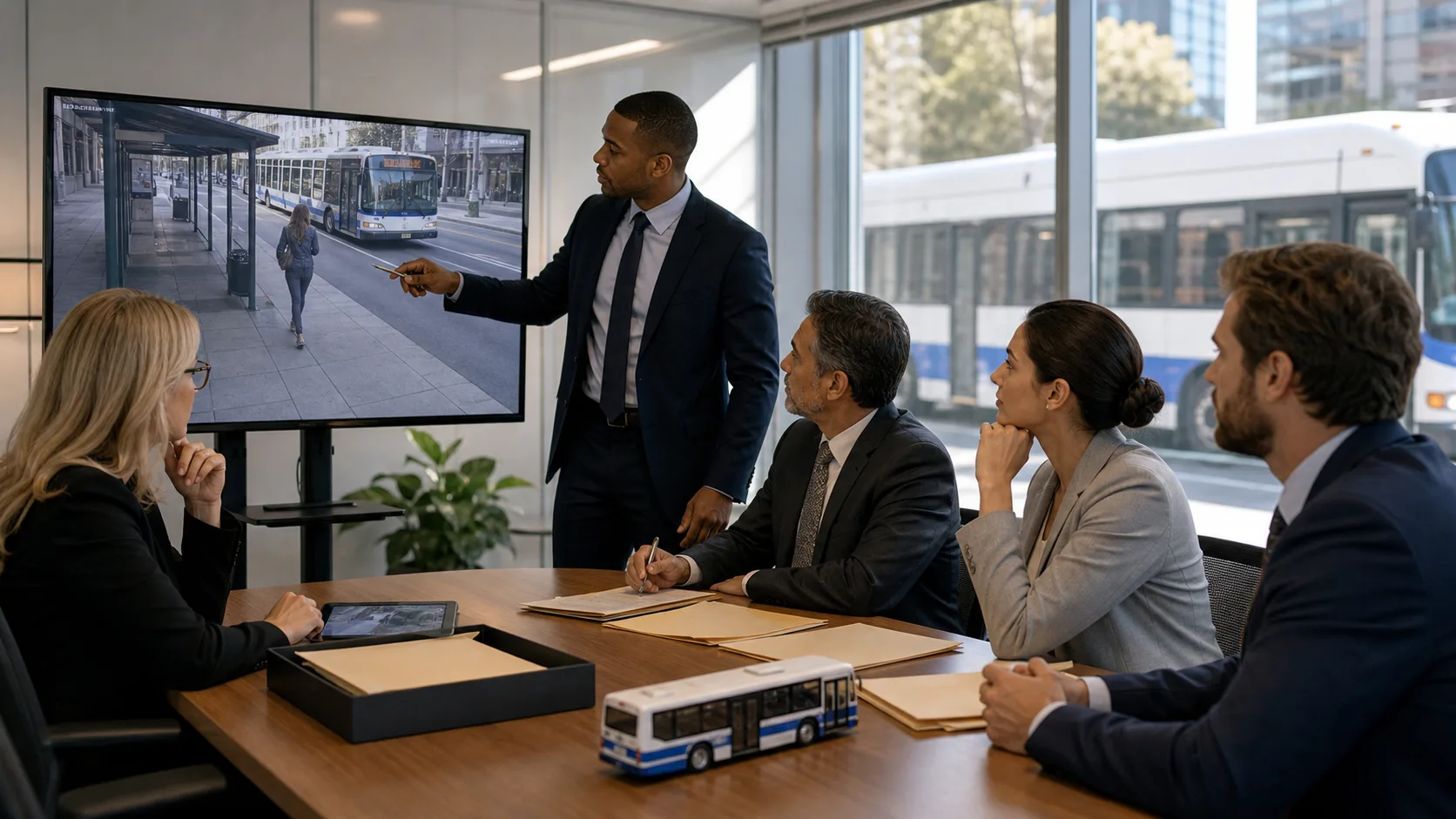
Once route video is preserved, it can be carefully reviewed to build a strong injury claim. Legal teams and accident reconstruction professionals often examine this footage frame-by-frame. They may look at:
- Vehicle speeds and changes in speed
- Lane position and any drift or sudden movement
- Stopping distance and time between braking and impact
- Driver behavior, such as checking mirrors or signaling
- The exact path of pedestrians or cyclists near the bus
When we combine this with other evidence, the story of the crash becomes clearer. Route video often works well alongside:
- Police crash reports and diagrams
- Physical damage to vehicles, including the bus
- Skid marks, debris patterns, and road conditions
- Electronic data from vehicle event recorders
- Medical records that document the injuries and timing of symptoms
Together, these pieces can create a consistent narrative that is difficult for an insurance company to ignore. Strong video evidence can support claims that a driver was negligent or violated traffic laws, and it can also disprove accusations that the injured person was solely at fault. It may demonstrate the force of impact and the seriousness of the collision, and it can help justify claims for pain and suffering, lost wages, and other damages.
When insurers see clear video that supports a claim, they may be more willing to negotiate in good faith, because it becomes harder to dispute what actually happened at the bus stop.
When to Call a Rock Hill Bus Stop Injury Lawyer
Timing matters a great deal after a bus stop crash that leads to injuries. Every day that passes increases the chance that route video will be lost, vehicles will be repaired, and witnesses will be harder to find. Speaking with an injury claims attorney in Rock Hill, SC soon after the incident gives you a better chance to protect both your rights and the evidence that supports your case.
At Schiller & Hamilton Law Firm, our work in personal injury and motor vehicle accident cases includes:
- Investigating bus stop and transit-related crashes
- Identifying all potentially responsible drivers and entities
- Working to secure route video, dash cam footage, and GPS data
- Handling communications with insurance companies
- Pursuing compensation for medical treatment, lost income, and other accident-related losses
Bus stop injuries can leave you facing a long recovery, time away from work, and uncertainty about the future. Understanding how route video evidence can support your claim is one step toward regaining control. By acting promptly and getting informed legal guidance, you give yourself a stronger chance to prove what truly happened and seek the compensation the law allows after a serious motor vehicle accident.
Protect Your Rights With Skilled Legal Guidance Today
If you or a loved one has been hurt by a dangerous or defective product, our team at Schiller & Hamilton Law Firm is ready to help you understand your options and pursue fair compensation. Speak with an experienced injury claims attorney in Rock Hill, SC who can investigate what happened, explain your next steps, and handle the legal process for you. Reach out today through our contact page to schedule a free consultation and get the guidance you need to move forward.