 803-902-4583


Blind-Spot Evidence Can Strengthen Your Truck Crash Claim
Blind-spot truck crashes can leave passenger vehicle occupants with serious injuries and difficult questions about what happened. Large commercial trucks have areas beside the cab, along the trailer, and behind the vehicle where a driver may have limited visibility. When a truck suddenly changes lanes, merges, or makes a wide turn, a smaller vehicle can be pushed off the road, forced into traffic, or caught beneath the trailer.
A blind spot does not excuse an unsafe maneuver. In a Rock Hill truck crash claim, we look closely at whether the truck driver took reasonable steps to check the area before moving. During late October, earlier sunsets, rain, fog, and heavier holiday traffic can make those checks even more important. Poor conditions may be part of the evidence, but they can also show why a commercial driver needed to act with greater care.
Truck Drivers Have Duties Before Changing Lanes
Commercial drivers receive specialized training because their vehicles are large, heavy, and harder to maneuver than passenger cars. Before entering another lane, merging onto a highway, or turning across traffic, a driver should take time to make sure the path is clear.
Safe lane-change practices may include:
- Checking side mirrors and available blind-spot monitoring equipment
- Activating turn signals early enough for nearby drivers to react
- Confirming that the adjacent lane is open before moving over
- Leaving enough following distance to see traffic conditions ahead
- Slowing down when rain, darkness, or fog limits visibility
As a truck accident lawyer in Rock Hill, SC, we may review the driver’s training, company safety rules, and applicable trucking requirements to understand what should have happened before the collision. A driver who relied on only one mirror, changed lanes too quickly, failed to signal, drove while distracted, or continued while fatigued may have fallen short of expected safety practices.
The fact that a passenger vehicle was beside a truck does not automatically place blame on that driver. Truck operators must account for nearby traffic and avoid moving their vehicles when they cannot do so safely.
Evidence Can Show How a Blind-Spot Crash Happened
The first version of events after a wreck is not always the whole story. A truck driver may say they never saw the other vehicle, while the injured driver may know they were traveling lawfully in the next lane for several moments before impact. Evidence can help fill in those gaps.
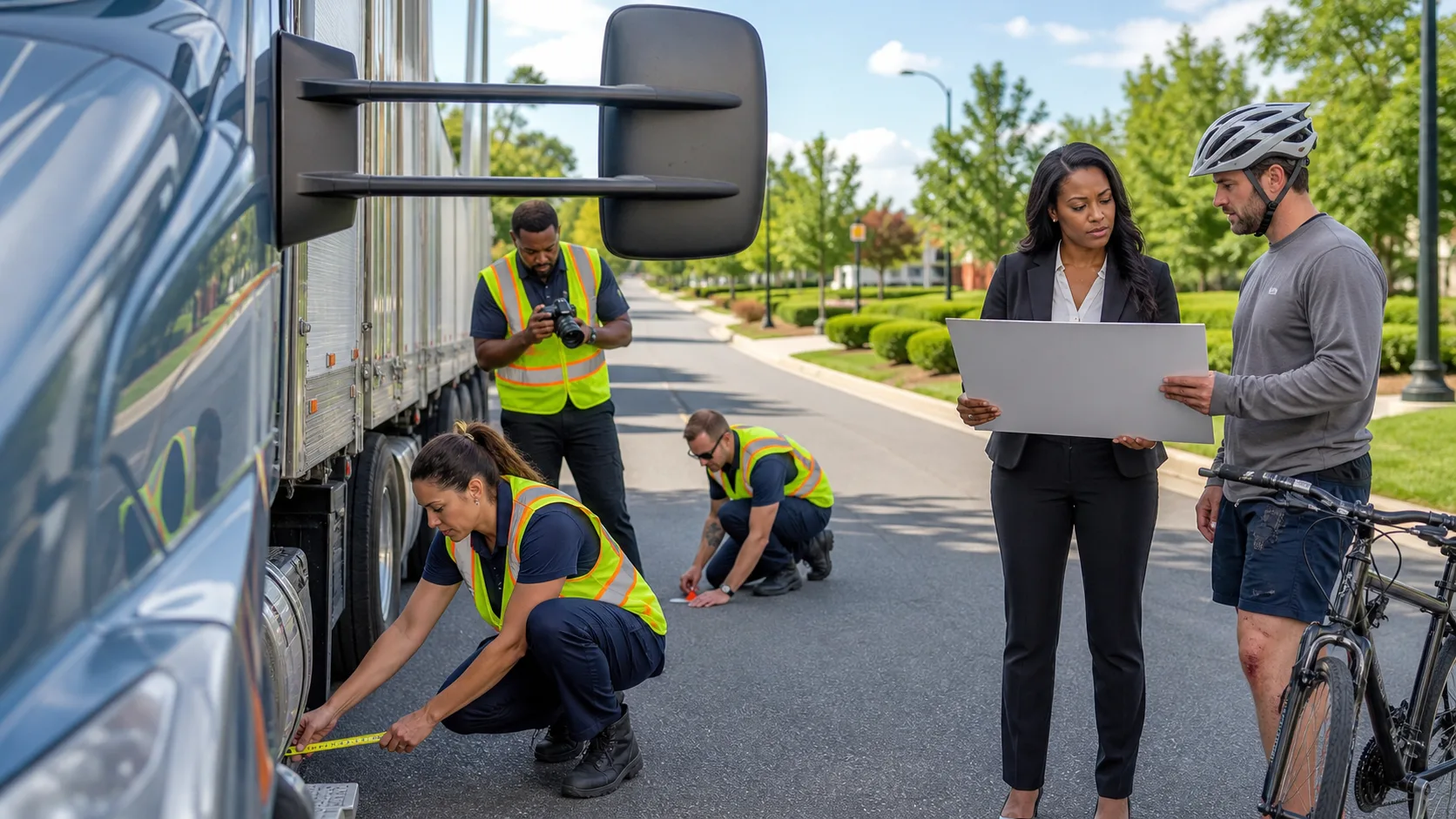
We often look for materials that show where each vehicle was located immediately before the crash, including:
- Dash camera, traffic camera, or nearby business surveillance footage
- Photos of vehicle damage, skid marks, debris, and the crash scene
- Statements from drivers, passengers, and other witnesses
- The official crash report and any diagrams included with it
- Vehicle data that may record speed, braking, or other actions
Commercial truck cases can also involve records not found in a typical car crash claim. Electronic logging devices, GPS information, onboard video, inspection paperwork, dispatch messages, and cell phone data may show the truck’s route, speed, hours of service, lane position, and driver activity.
Time matters because video can be overwritten and witnesses may become difficult to find. Trucking companies may also begin their own investigation soon after a collision. We can help identify records that may need to be preserved and review whether the official report leaves out important details or reaches a disputed conclusion.
Several Parties May Share Fault for Your Losses
The truck driver may be responsible, but that is not always the end of the inquiry. A trucking company may face responsibility when it hired an unqualified driver, failed to provide proper training, ignored maintenance needs, encouraged unrealistic delivery schedules, or did not enforce its own safety rules. Depending on the facts, the company may also be accountable for negligent driving that occurred while the driver was working.
Other parties may deserve attention as well. A maintenance provider could be involved if faulty mirrors, cameras, lights, brakes, or steering components played a part in the collision. A cargo loading company may also come under review if an improperly loaded trailer affected the truck’s handling or led to an unsafe maneuver.
Insurance companies may argue that you stayed in the truck’s blind spot too long, sped up, failed to yield, or should have expected the truck to move over. Evidence may challenge those claims by showing the truck driver had time and space to see your vehicle, failed to signal, or did not check mirrors before changing lanes. South Carolina’s comparative negligence rules can make fault allocation important, so the details of the crash can affect a claim in meaningful ways.
Your Damages Tell the Full Story
A blind-spot collision can create losses that continue well beyond the day of the wreck. Depending on the circumstances, an injury claim may include emergency treatment, hospital care, surgery, rehabilitation, prescriptions, future medical needs, lost income, reduced earning ability, vehicle damage, and other crash-related expenses.
Medical records are only one part of that picture. We encourage clients to keep organized records showing how injuries affect day-to-day life. Treatment plans, pay records, photos, receipts, and personal notes can help show pain, mobility limits, missed activities, emotional strain, and changes to family responsibilities.
Insurers may try to downplay the impact of a collision by claiming treatment was unnecessary, an injury existed before the crash, or recovery happened quickly. Clear medical and financial documentation can help present a more complete account of what the collision changed for you.
Take Prompt Steps to Protect Your Rights
Your health comes first after a truck crash. Seek medical care promptly, follow treatment recommendations, and keep copies of records connected to the collision. If you are able, preserve photos, insurance information, witness contact details, medical bills, and any video or vehicle data available to you.
It is also wise to understand the full extent of your injuries and losses before giving a recorded statement or accepting a quick settlement. Careful documentation, early evidence preservation, and a clear review of the truck driver’s actions can help protect your ability to pursue a fair result after an unsafe lane change.
Get Clear Guidance for Your Truck Crash Claim
At Schiller & Hamilton Law Firm, we help injured people assess the evidence, identify responsible parties, and pursue compensation for crash-related losses. Speak with a truck accident lawyer in Rock Hill, SC who can evaluate the circumstances of your collision and explain your legal options. To discuss your case with our team, contact us today.