
 803-902-4583


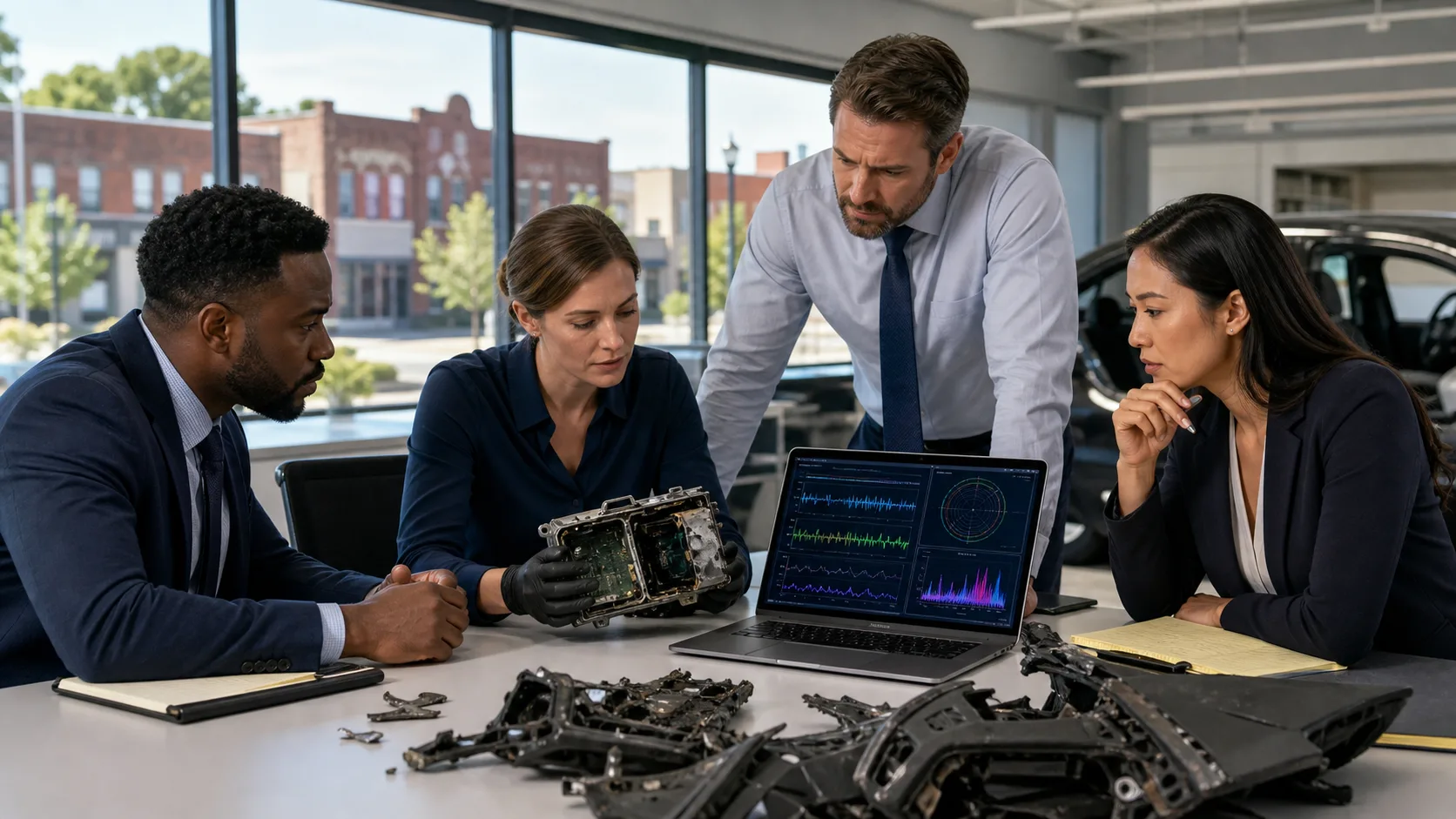
Crash data recorders can help bring disputed Rock Hill injury claims into focus. In many motor vehicle accidents, the hardest questions involve only a few seconds before impact: Was someone speeding? Did either driver brake? Did a vehicle enter the intersection too fast?
During fall, rain, wet leaves, earlier sunsets, school traffic, and weekend travel can make those questions even harder to answer. At Schiller & Hamilton Law Firm, we look at electronic vehicle data alongside the full picture, including scene evidence, witness accounts, and South Carolina fault rules.
Crash Data Can Bring Facts Into Focus
Many newer passenger vehicles have an event data recorder, sometimes called a crash data recorder or black box. These systems may save limited information before, during, and after a qualifying collision. They do not usually record every second of every trip, and the information available depends on the vehicle’s make, model, year, and the force of the crash.
A recorder may capture details such as:
- Vehicle speed before impact
- Brake use and throttle position
- Steering input and engine speed
- Airbag deployment and impact timing
- Seat belt status
That information can help test claims that a driver was speeding, failed to brake, or approached an intersection too quickly. Still, a data download does not automatically prove fault. It is one piece of evidence, not a final answer.
Recorder data may not show the color of a traffic light, a person’s view of the road, distracted driving, or a sudden hazard in the roadway. Our role is to help you understand whether the available information supports your account and whether a trained accident reconstruction professional should review it.
Event Data Records Seconds That Matter
A crash can happen fast, but the dispute that follows may last much longer. When drivers give conflicting accounts, data from the vehicles involved may provide a clearer timeline of events. For example, recorded speed and braking information might help examine whether a rear-end collision involved a sudden stop, following too closely, or a driver who did not react in time.
The data also has limits. A vehicle may not record the same information as another vehicle, and a collision may not trigger a recordable event. Technical information must be read carefully and compared with the facts at the scene. A number on a report without context can be misunderstood.
When you work with an injury claims attorney in Rock Hill, SC, we can review whether event data may be available and how it fits with the other evidence in your motor vehicle accident claim. We do not rely on an insurer’s reading of technical information without asking whether the full record supports that interpretation.
Prompt Preservation Protects Digital Evidence
Time matters after a crash. A damaged vehicle may be repaired, sold, declared a total loss, or sent to a salvage yard before anyone considers whether its recorder holds useful data. In some vehicles, later events can overwrite earlier recorded information.
If you are able, keep records connected to the collision, including:
- Photos of the vehicles, roadway, debris, and visible conditions
- Towing paperwork, repair estimates, and vehicle location details
- The crash report and insurer communications
- Medical records and documents showing time missed from work
- Names and contact details for witnesses
Before authorizing disposal of a damaged vehicle, it may be wise to determine whether recorder information could matter. We may also send preservation notices to people or businesses that control evidence. Depending on the crash, that could include another driver, a commercial vehicle owner, a repair facility, towing company, insurer, or salvage yard.
Truck accident claims can involve other electronic records as well. Dash camera footage, fleet records, mobile device evidence, and electronic logging information may help explain what happened before impact.
Data Gains Meaning From the Full Investigation
Electronic data is often more persuasive when it matches other proof. Police reports, photographs, roadway measurements, vehicle damage, surveillance video, witness statements, and medical documentation can all add context that a digital download cannot provide on its own.
Accident reconstruction professionals may compare recorded speed, braking, and impact information with the physical damage to each vehicle and the crash scene. That work may help assess claims involving unsafe turns, lane changes, red-light violations, rear-end impacts, or sudden braking.
Weather and lighting can also shape a Rock Hill crash investigation. October rain, fog, wet leaves, low sun angles, and earlier darkness may affect visibility and stopping distance. Recorder information could show whether a driver changed speed or braking for the conditions, while weather records and scene evidence may help show what a reasonably careful driver should have expected.
South Carolina Fault Rules Make Accuracy Important
South Carolina follows a modified comparative negligence system in many personal injury cases. Your compensation may be reduced by your share of fault. If you are found more than 50 percent responsible, you may be unable to recover damages from the other party.
Because of those rules, even a small dispute over speed, braking, or vehicle position can matter. An insurer may claim that an injured driver contributed to a crash by speeding, braking too late, failing to react, or taking some other action. Recorder data may support that claim, challenge it, or raise new questions that require closer review.
At Schiller & Hamilton Law Firm, we examine the available evidence as a whole when evaluating motor vehicle accident claims. A careful review can help identify fault arguments and assess damages such as crash-related medical expenses, lost income, pain, and other losses that may be recoverable.
Protecting Your Claim After a Rock Hill Crash
Crash data recorders can be an important source of information, but they are only one part of a thorough investigation. After a collision, documenting what you can, preserving the vehicle when possible, following medical guidance, and avoiding quick assumptions about fault can help protect information that may later matter.
A timely legal review may help identify evidence before it disappears and provide a clearer understanding of the options available after a Rock Hill motor vehicle accident.
Get Clear Guidance for Your Next Steps
At Schiller & Hamilton Law Firm, we can discuss how an injury claims attorney in Rock Hill, SC may help assess the circumstances of your case. Our team can answer your questions and explain what to expect throughout the claims process. To start a conversation, contact us today.