 803-902-4583


Why Red-Light Crashes Turn Into "Your Word vs. Theirs"
Red-light crashes at Lancaster intersections often come down to competing stories. Many local intersections do not have clear traffic cameras trained on every angle, and sometimes any available footage is grainy, too far away, or quickly overwritten. When that happens, timing and witness accounts become the heart of the case.
After a serious collision, it is common for each driver to insist they had the green light and that the other driver blew through a red. That dispute matters because whoever entered the intersection without the right of way is usually the one held responsible. Timing questions, such as how long a light was red or yellow and how fast each vehicle approached the intersection, can make the difference between a full recovery and a denied claim.
In these situations, early legal help can make a real difference. A car accident attorney in Lancaster, SC can move quickly to preserve evidence, speak with witnesses while memories are fresh, and protect an injured driver from being unfairly blamed before the facts are fully understood.
How Fault Is Decided in South Carolina Red-Light Collisions
South Carolina traffic laws require drivers to obey traffic signals and yield the right of way when facing a red light or arrow. Running a solid red light is usually strong evidence of negligence, because the law expects drivers to stop and wait until the signal changes before entering the intersection.
Fault in these crashes is often decided by looking at several pieces of information together, including:
- What color each driver says the light was when they entered the intersection
- Any traffic citations issued by the responding officer
- Statements from independent witnesses, such as other drivers or pedestrians
- Physical evidence at the scene, like where the vehicles came to rest.
South Carolina follows a form of comparative negligence. That means an injured person’s compensation can be reduced if they are found partially at fault, and if they are found mostly at fault, they might not recover anything at all. For example, a driver accused of speeding through a late yellow could see their share of responsibility debated even if the other driver ran a clear red.
Insurance companies and defense lawyers often focus on inconsistencies, such as a slightly different description of the light’s timing from one interview to the next. A clear, consistent narrative supported by as much objective evidence as possible is essential when the other driver insists the light was green for them. This is where methodical investigation and legal guidance can help keep the facts at the center of the discussion.
The Problem with Witness Timing and Conflicting Stories
Human memory is imperfect, especially under stress. In the seconds before and after a violent impact, most people are focused on survival, not on counting how many seconds a light was yellow or whether the signal had just changed to red. That is why honest witnesses can walk away with very different recollections of the exact same event.
Common problems with timing and witness statements in red-light crashes include:
- Bystanders mixing up which direction had the green light
- Passengers misjudging how long the light was yellow before the impact
- Involved drivers honestly believing the light was still yellow when it had already turned red
- People confusing the timing of brake sounds, horn blasts, and the signal change
These gaps often grow larger with time. A witness interviewed several days or weeks after the crash might unintentionally fill in missing details, influenced by conversations with others or assumptions about how such collisions usually occur. Small differences, such as whether the light was “about to turn red” or “had just turned red,” can snowball into big disputes about fault.
Insurance companies may use these inconsistencies to cast doubt on an injured person’s story. If a witness first said the light was green, then later says it could have been yellow, insurers might argue that no one really knows who had the right of way. Without other evidence to anchor the timeline, a valid claim can be weakened by nothing more than ordinary human memory problems.
Proving Who Really Had the Light in Lancaster Intersections
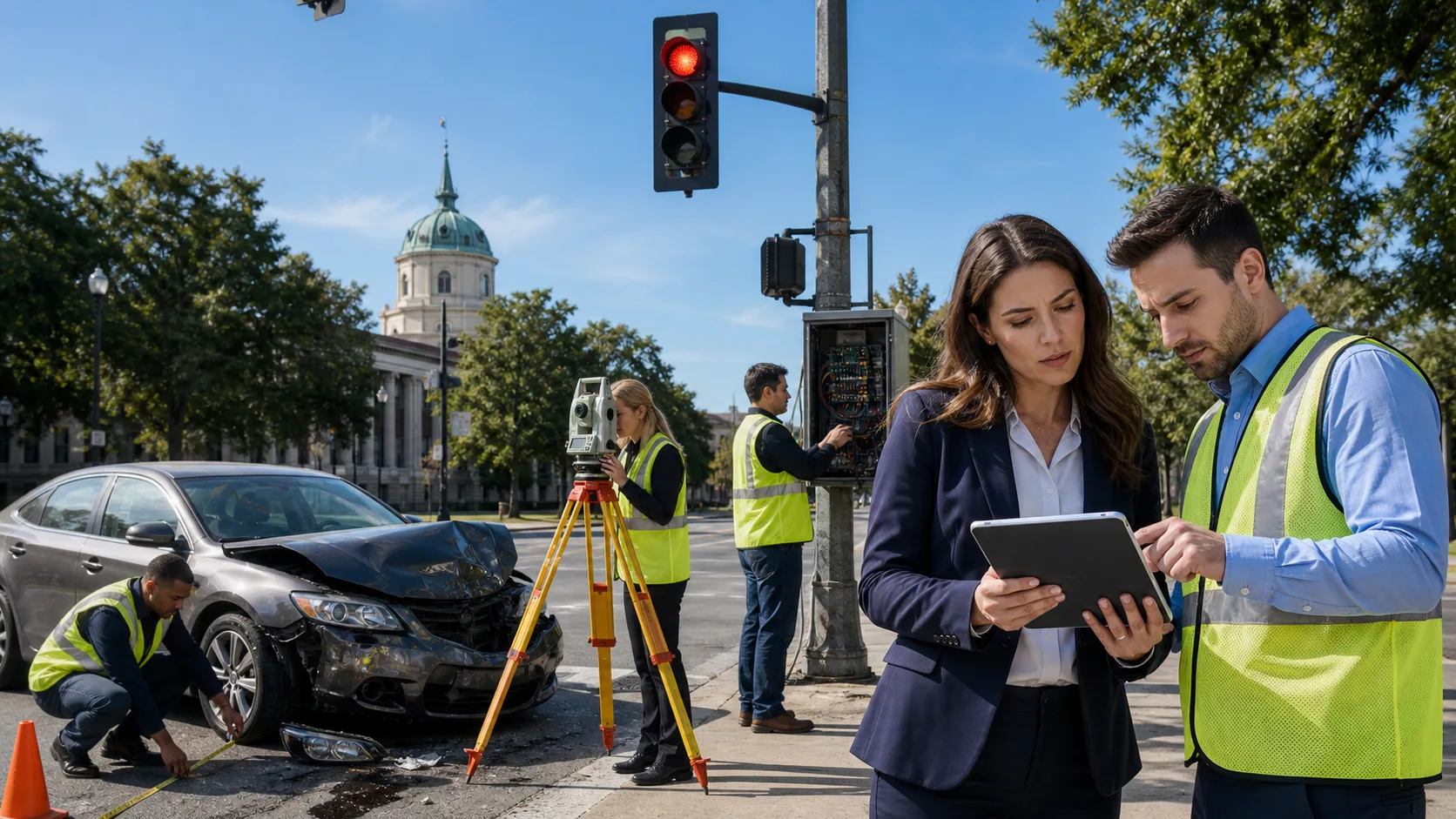
When timing is in dispute, we look beyond simple “he said, she said” statements. There are several types of evidence that can help clarify what actually happened at a Lancaster intersection:
- Intersection design plans and traffic signal timing records
- Event data recorders (sometimes called black boxes) from the vehicles
- Dashcam footage from the involved cars or nearby vehicles
- Surveillance video from nearby businesses or homes
- 911 audio recordings that capture immediate statements from callers
Traffic engineers and reconstruction experts can take those pieces and build a picture of the crash. They may study skid marks, the point of impact, final rest positions, and vehicle damage to estimate speeds and reaction times. By comparing those estimates with the official signal timing diagrams, they can often determine which driver could realistically have had a green or yellow when they entered the intersection.
Many signal timing systems are not stored forever. Data can be overwritten or discarded as part of routine operations. An experienced car accident attorney in Lancaster, SC can act quickly to request or subpoena those records from city or county agencies before they disappear. The same urgency applies to surveillance video, which is frequently erased or recorded over within days.
In the moments after a crash, injured people are not thinking about legal strategy, but some immediate steps can still help preserve the truth:
- Taking photos or videos of the intersection, damage, skid marks, and signal heads
- Getting names and contact information for anyone who witnessed the crash
- Noting weather conditions, traffic level, and any construction or detours
- Seeking prompt medical care and describing how the collision happened to providers
These practical steps, combined with technical evidence, can turn a disputed red-light case into a claim supported by solid facts.
Protecting Your Claim When the Other Driver Blames You
When the other driver is pointing the finger at you, it is easy to feel overwhelmed. Still, there are important ways to protect yourself and your potential claim right from the start.
If you are physically able, consider the following after a suspected red-light-violation crash:
- Call law enforcement and wait for officers to arrive, rather than agreeing to “handle it privately”
- When giving your statement, describe the signal phase as clearly as you remember it, without guessing or filling in gaps
- Stick to what you know from your own senses, and avoid speculating about the other driver’s speed or attention
It is also wise to avoid arguing at the scene. Heated confrontations can lead to statements said in frustration, which might be repeated later in a way that sounds like an admission. The same applies to social media. Posts or comments about who was at fault, how fast you were going, or how the light changed can be misunderstood or quoted out of context.
Insurance adjusters may contact you quickly and ask for a recorded statement. While being cooperative is important, giving a detailed recorded account before you have had time to process the crash or review documents can lock you into a version that leaves out key facts. Adjusters might compare that early recording to later statements and argue that any difference suggests you are not being truthful.
Allowing a car accident attorney in Lancaster, SC to handle communications can help keep the focus on evidence rather than misstatements or misunderstandings. Legal counsel can also make sure requests go out promptly for traffic data, camera footage, and other technical materials that support your version of events, and can challenge inaccurate fault determinations when the initial investigation gets it wrong.
Take Control of Your Red-Light Crash Case in Lancaster
Timing disputes in red-light crashes are common, and they do not automatically mean you will lose your case. With careful investigation, expert analysis, and a focus on objective evidence, it is often possible to show who actually had the right of way, even when the other driver or a witness says otherwise.
If you were hurt in a Lancaster red-light collision, do not assume you are powerless just because the story currently sounds like “your word vs. theirs.” The sooner the facts are preserved and examined, the better the chances that the truth about the signal, the timing, and the impact will come to light.
Protect Your Rights After a Serious Car Wreck
If you were hurt in a crash, our team at Schiller & Hamilton Law Firm is ready to review what happened and explain your legal options. A dedicated car accident attorney in Lancaster, SC can handle the insurance companies while you focus on healing. We will walk you through every step, from gathering evidence to pursuing full compensation. To schedule a consultation, please contact us today.