 803-902-4583


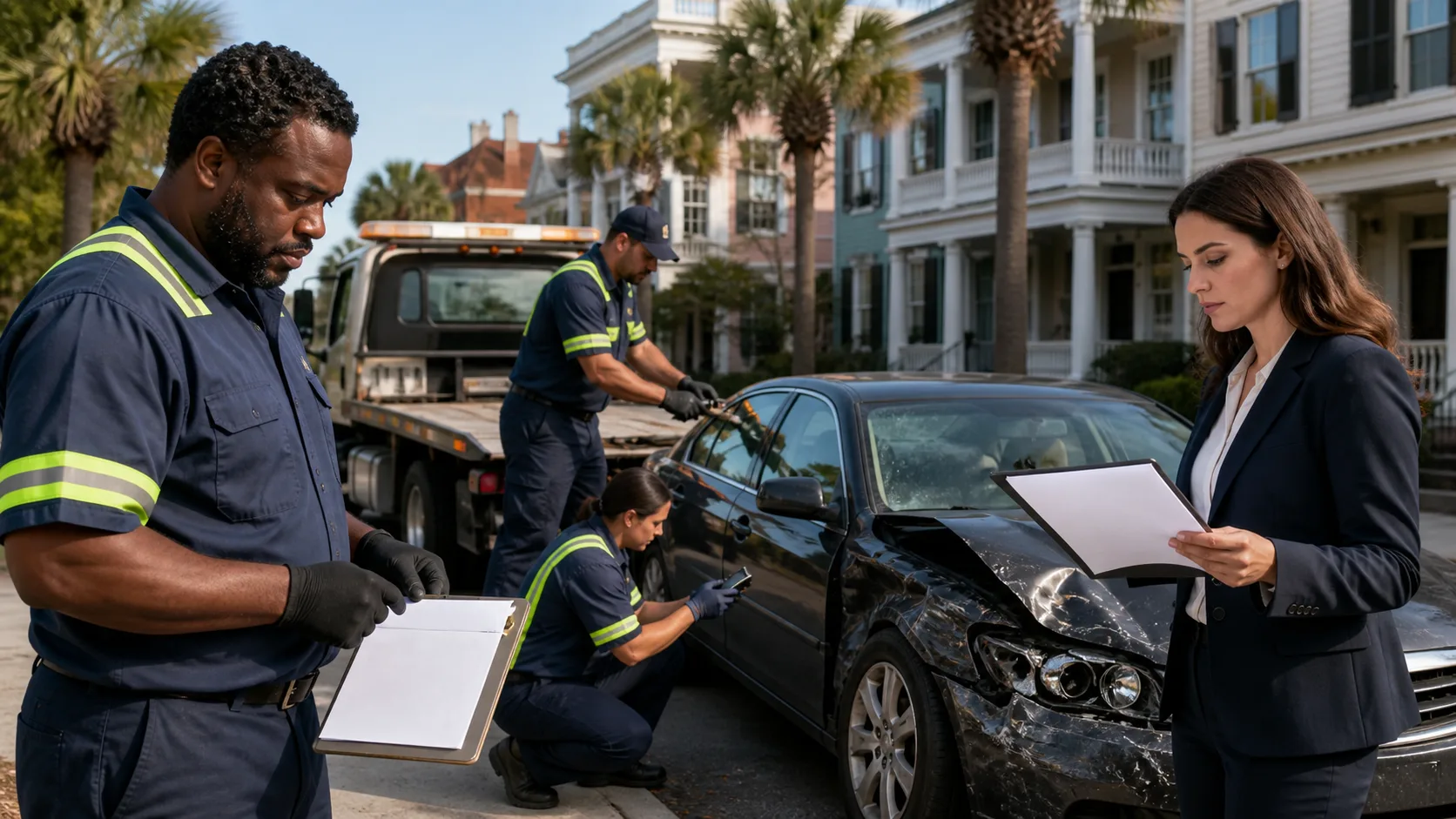
Why Towing Company Records Matter After a Charleston Crash
After a serious car crash in Charleston, most people focus on police reports, medical care, and dealing with insurance. Towing company records often feel like a minor detail, just another bill to pay. In reality, those records can be powerful evidence that helps show how hard your vehicle was hit, how badly it was damaged, and why your injuries are as serious as they are.
When we talk about “crash severity” in a personal injury case, we are looking at things like the extent of vehicle damage, the forces involved in the impact, and the likelihood of significant injuries. Towing records can support all of these issues. A car accident lawyer in Charleston, SC, can gather towing paperwork, photos, and service logs and compare them with police reports, scene photos, and medical records to build a stronger claim for compensation.
Key Towing Documents That Can Support Your Injury Claim
Towing companies and storage yards often create a paper and electronic trail that tells an important story about a wreck. That story can help show both how severe the crash was and what happened afterward.
One key piece of evidence is the tow ticket or invoice. These documents usually include:
- Date and time of the tow
- Pick-up location and drop-off location
- The towing reason, such as collision or disabled vehicle
- Notations about the vehicle’s condition and drivable status
If a ticket includes language like “severe front-end damage,” “driver’s side crushed,” “airbags deployed,” or “no start,” that supports the idea that the crash involved significant force. When an insurance company tries to argue that a collision was “just a fender bender,” written notes from an independent tow operator can say otherwise.
Tow operators may also make informal notes, complete checklists, or mark body damage diagrams. These can include:
- Which panels were damaged
- Whether the wheels were bent or misaligned
- If glass was shattered or missing
- Obvious fluid leaks under the car
Because towing staff are typically neutral third parties with no stake in the claim, their observations carry weight. Their notes can support your account of a violent impact or make it harder for an insurer to claim the damage was minor.
Storage yards and impound lots sometimes take photos when a vehicle arrives and record the condition of the car. These records can capture:
- The position of deployed airbags and seatbelts
- The way the frame, bumper, or roof is bent
- Evidence of fluid leaks, broken axles, or pushed-in engine compartments
- Broken interior components, such as steering wheels or seats
Photos and condition logs from the tow yard can show details that may not appear clearly in crash scene photos. For a car accident lawyer in Charleston, SC, those images can help illustrate just how serious the wreck was.
How Towing Evidence Helps Prove Crash Severity and Liability
The more severe the property damage, the easier it often is to explain why a person suffered serious injuries. Towing records help link those pieces together.
If the tow report shows major rear-end damage and your medical records document neck and back injuries, that connection is easier to explain. If the notes mention that the driver’s door was jammed shut and the airbags deployed, that supports claims of strong frontal or side impact forces. Insurance companies sometimes argue that a crash was too minor to cause serious harm. When the towing documentation shows a disabled vehicle, structural damage, or the need for a flatbed because the car could not roll, it becomes harder to dismiss the event as trivial.
Towing records also help clarify how and where the collision happened. Information such as pick-up location, time of tow, and the vehicle’s position when the tow truck arrived can help accident reconstruction efforts. When these details are combined with:
- Police diagrams and narrative
- Witness statements
- Scene photos and videos
we, and any experts we work with, can better understand vehicle paths, points of impact, and final rest locations. A car accident lawyer in Charleston, SC may share tow records with accident reconstruction professionals, who then use them to support conclusions about speed, direction of impact, and crash sequence.
Insurers sometimes raise common arguments to reduce or deny claims, such as:
- The damage was preexisting and not caused by this crash
- The vehicle was still drivable, so the impact could not have been serious
- Airbags did not deploy, so injuries must be exaggerated
Towing documentation can provide independent confirmation of when and how damage occurred. Notes that the car could not start after the crash, or photos of fresh debris and crumpling, directly undercut these defense tactics.
Steps to Protect Towing Evidence After a Motor Vehicle Accident
Protecting towing evidence starts very soon after the collision. Acting quickly helps make sure important details do not disappear.
First, it is helpful to identify the towing company as soon as you can. At the scene, try to:
- Ask for the towing company’s name and phone number
- Note the truck number or take a photo of the truck’s logo
- Confirm where your vehicle is being taken
- Keep any receipt or business card the driver gives you
If you are transported from the scene by ambulance and cannot gather this information yourself, you may be able to get it later from the police report. Still, early notes and photos from you or a family member are helpful.
Next, preserve every document related to the tow and storage. That includes:
- Tow bills and invoices
- Storage yard receipts
- Any paperwork you sign authorizing storage, release, or salvage
- Any written notices about potential auction or disposal
If it is safe and medically reasonable, visiting the tow yard or having someone you trust go there to take photos can be important. Capturing images of the car from multiple angles, the interior, the tires, and any visible leaking fluids can support your case before any repairs or salvage occur.
Finally, it is usually best to let your attorney handle formal requests for detailed records. A car accident lawyer in Charleston, SC can send preservation letters to the towing and storage companies, asking them to keep:
- Tow tickets and dispatch logs
- Photos taken by the company
- Electronic records such as GPS or dispatch notes
Legal counsel can then follow up with formal requests through the claims process or litigation to make sure those records are not deleted or lost over time.
How a Charleston Injury Lawyer Uses Towing Records Strategically
Once towing records are preserved, they become part of the larger evidence picture. We can compare tow documentation with repair estimates, crash scene photos, and your medical records to show how serious the collision was and what it did to your body.
In settlement negotiations, insurance adjusters often focus on property damage figures and visible injuries. When we present:
- Detailed tow records showing a disabled, heavily damaged vehicle
- Storage yard photos that show the true extent of the impact
- Medical reports tying your injuries to the forces of the crash
it increases leverage and can support a higher settlement value. The towing evidence backs up your story with neutral, third-party documentation.
Experts, such as accident reconstruction specialists or biomechanical consultants, may also rely on towing records. They can study:
- The pattern and location of damage in tow and yard photos
- Notes about whether the car was drivable or had wheel or frame damage
- Evidence of safety system deployment, like airbags and seatbelt marks
Using this information, experts can model how the crash unfolded, estimate impact angles, and explain why certain injuries, such as head trauma or spinal damage, occurred. Their testimony can be stronger when supported by detailed towing evidence.
If a fair settlement cannot be reached, towing company representatives and their records may become part of a trial. A tow driver can testify about what they saw at the scene, how the car looked, whether it could roll, and where it was taken. Combined with their paperwork and photos, that testimony can help a jury understand that you experienced a serious collision, not a minor bump, and that your injuries and losses are real and significant.
Turn Towing Records Into Strong Evidence for Your Claim
Towing records are easy to overlook, but they can play an important role in a car crash claim. Every note about damage, every photo of a bent frame, and every time stamp on a tow ticket is a piece of the puzzle that shows how severe your collision was.
By acting quickly to identify the towing company, keeping all documents, and working with a car accident lawyer in Charleston, SC who knows how to secure and use this information, you can turn these routine records into meaningful evidence. Careful preservation and strategic use of tow-related documents can help support your case and your path to financial recovery.
Protect Your Rights After a Charleston Car Accident
If you were hurt in a crash, you do not have to sort through insurance questions and medical bills on your own. Our team at Schiller & Hamilton Law Firm is ready to review what happened, explain your options, and pursue the compensation you deserve. Speak with a dedicated car accident lawyer in Charleston, SC who can guide you through each step of the legal process. To get started, simply contact us for a confidential consultation.