 803-902-4583


After a Charleston Night Crash, Time Is Not on Your Side
Nighttime crashes around Charleston can be disorienting and frightening. One moment you are driving along a dark stretch of Highway 17 or through an unlit intersection, and the next you are surrounded by flashing blue lights, confused drivers, and damaged vehicles. In that chaos, it is easy to feel overwhelmed and to put off decisions until later.
What many people do not realize is that a night collision starts a race against the clock. On dark rural roads, in poorly lit neighborhoods, or near busy nightlife spots, important pieces of evidence can change or disappear in a matter of minutes or hours. Tire marks fade, glass gets swept away, and the lighting that played such a big role in what you could or could not see will not look the same by daylight. Acting quickly can make a real difference in protecting your injury claim.
This is where a car accident lawyer in Charleston, SC can make an immediate impact. Our team knows how time-sensitive night crash evidence can be, and we work to secure proof before it is altered, removed, or forgotten. Preserving that information early often shapes what an insurance company is willing to do later.
Why Night Driving in Charleston Is so Dangerous
Driving around Charleston after dark comes with risks that many drivers underestimate. Visibility is reduced on secondary roads with little or no lighting, and sharp curves or narrow bridges can appear with very little warning. Oncoming headlights can create glare, especially when the pavement is wet, and it takes only a second of squinting or shielding your eyes for a driver to miss a hazard.
Some of the conditions that make night driving here so risky include:
- Poorly lit side streets, rural highways, and neighborhood cut-throughs
- Glare from oncoming headlights and reflective road surfaces
- Sudden obstacles like pedestrians, cyclists, or parked vehicles in the roadway
- Confusing or hidden road signs at dark intersections
Late in the evening, driver behavior often changes as well. Fatigue is common after a long day, and reaction times tend to slow down. Alcohol use is more prevalent near downtown entertainment areas, waterfront bars, and late-night restaurants. Distracted driving also increases when people are checking directions, answering messages, or trying to stay awake on the drive home from a late shift.
These conditions often lead to familiar patterns of night crashes, such as:
- Rear-end collisions in stop-and-go traffic or at red lights that are hard to see
- Sideswipes when a driver drifts over the lane line or misjudges distance
- Failure to yield at poorly lit intersections or when turning left across traffic
- Wrong-way or lane-departure crashes on highways or multi-lane roads
Each of these crash types raises questions about what each driver could reasonably see and do, which makes preserving the conditions at the time of the wreck especially important.
The Crucial Evidence That Can Vanish Overnight
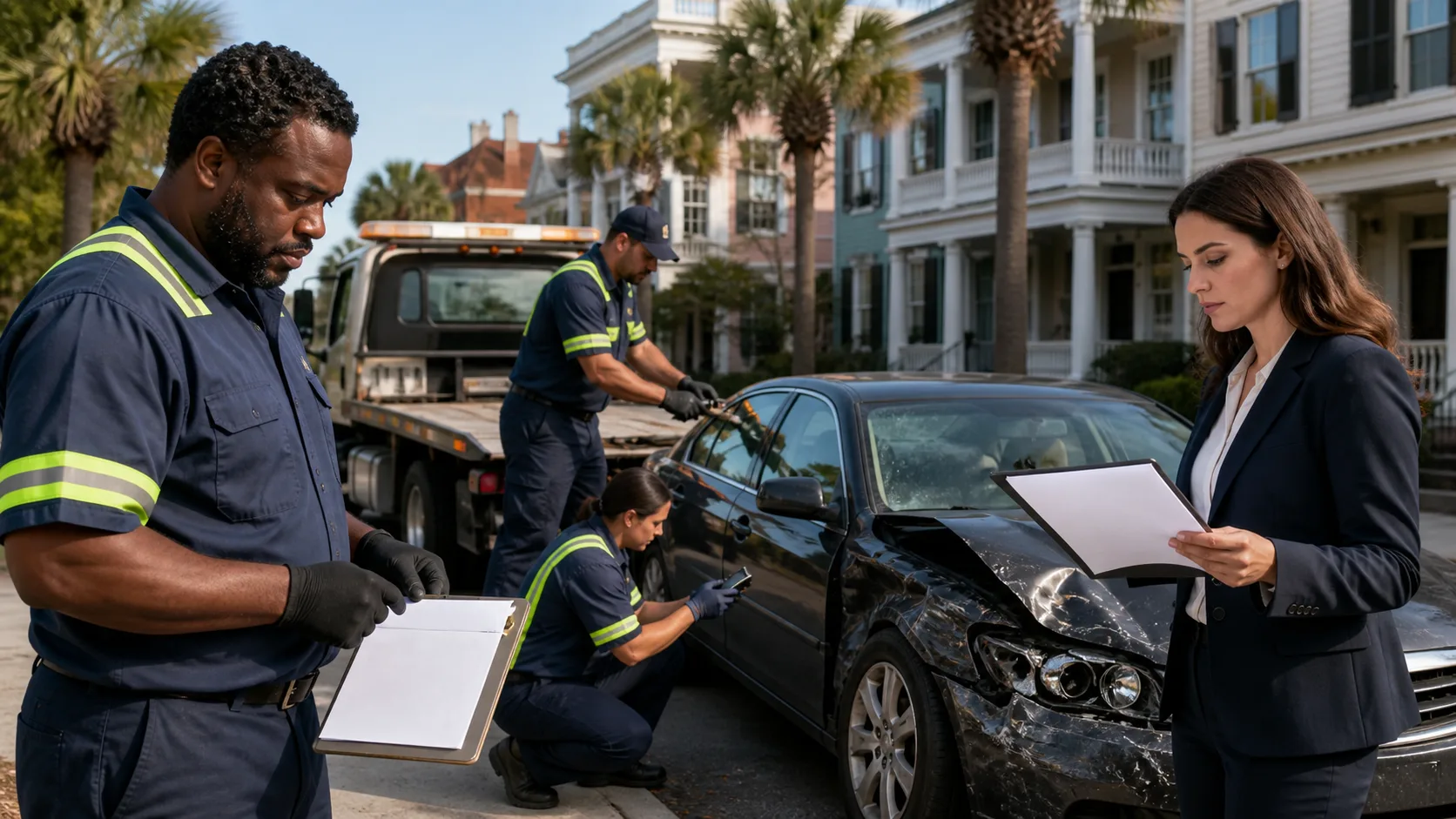
After a night collision, the scene will not stay the same for long. Physical evidence is often the first to go. Skid marks, debris fields, broken glass, and vehicle fluid trails show how fast vehicles were going, where they collided, and how drivers tried to avoid impact. Once tow trucks, street sweepers, or rain pass through, that information can be gone.
Physical items that can quickly disappear include:
- Skid marks, scuffs, and gouges in the pavement
- Debris patterns from broken headlights, bumpers, and mirrors
- Paint transfers that suggest where vehicles contacted each other
- Fluid spills that trace vehicle paths after impact
Environmental and visual evidence can also change quickly. Streetlights that were burned out might be replaced within days. Overgrown trees that blocked stop signs can be trimmed. Temporary construction setups with cones, signs, or barrier placements may be moved to a new configuration. Even a malfunctioning traffic signal can be repaired without much notice, erasing an important detail about who had the right of way.
On top of that, digital and electronic records are often time-limited. Nearby businesses may record over surveillance footage on a short loop. Traffic camera recordings, dash cam clips, and 911 audio files might be stored only briefly unless someone requests them in time. If these sources are not identified and preserved early, they may not be available when you need them.
How an Experienced Attorney Preserves Night Crash Evidence
Acting fast is not just helpful; it can shape the entire outcome of a claim. A car accident lawyer in Charleston, SC can take immediate steps to secure evidence that might otherwise disappear. One of the first actions is often sending preservation letters to businesses, agencies, or individuals who may have relevant recordings or documents. These notices request that they save camera footage, maintenance records, or other materials instead of letting them be erased or discarded.
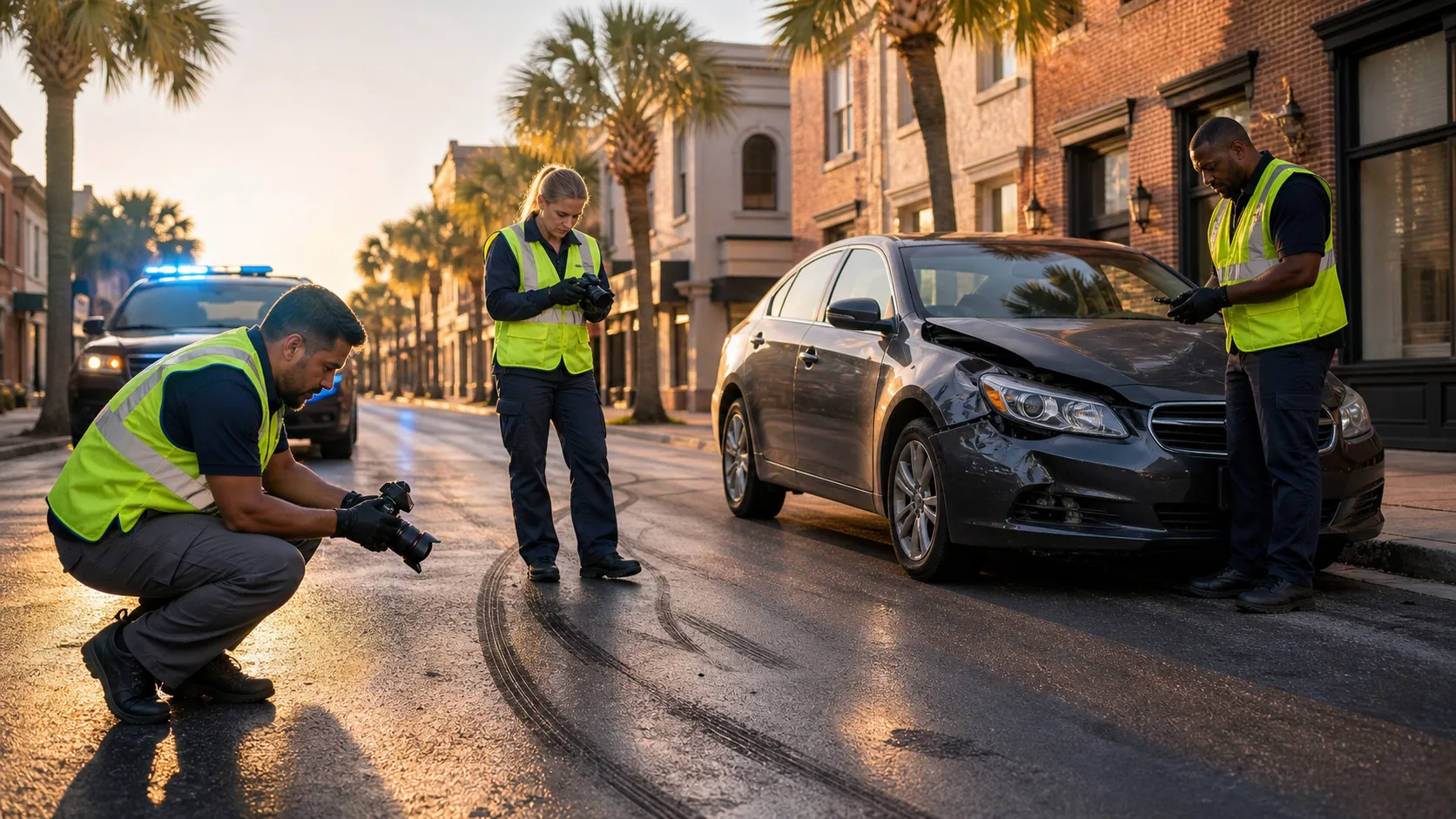
We may also visit and document the scene as soon as possible, often at night and in similar conditions. That can include:
- Taking photos and videos from different angles and distances
- Measuring skid marks and distances between landmarks
- Recording lighting levels, sight lines, and any visual obstructions
- Noting the condition of signs, signals, and pavement markings
In many cases, we work with experts, such as accident reconstruction professionals, lighting specialists, or human factors experts. They can analyze the impact points, vehicle damage, and road markings to reconstruct speeds and movements. Lighting experts can give opinions about how visible a pedestrian, cyclist, or vehicle would have been at a given time of night. Human factors specialists can address whether a driver had enough time to perceive and react to a hazard.
Preserving testimony is just as important. Witnesses’ memories fade quickly, especially about details like which vehicle had its lights on, how fast traffic was moving, or whether a driver seemed unsteady or distracted. Gathering statements as soon as possible helps lock in those details while they are still fresh. In some cases, we can also seek cell phone records, vehicle event data recorder information, and other electronic records before they are lost or overwritten.
Protecting Your Health and Your Claim After a Night Wreck
After a night crash, it is easy to focus on getting your vehicle off the road and getting home. However, your health and your legal rights both depend on what you do in those first hours and days. Adrenaline, shock, and darkness can hide symptoms, so injuries that feel minor at the scene may be more serious than they appear. Delaying medical treatment can also create openings for an insurance company to argue that you were not really hurt in the wreck.
At the scene, some practical steps can help protect both your safety and your claim:
- Call 911 so there is an official record and emergency help if needed
- Take photos and videos of vehicle positions, damage, and the surrounding area
- Get names and contact information for witnesses and other drivers
- Notice nearby cameras on buildings, in parking lots, or on traffic poles
- Avoid admitting fault or making detailed statements before you know all the facts
Once you have received medical attention, speaking with a car accident lawyer in Charleston, SC can help you manage the next phase. Dealing with insurance adjusters, gathering records, and calculating losses is stressful even in the best conditions, and it can be especially difficult when you are trying to recover from injuries. Legal guidance can help ensure that evidence is preserved, deadlines are met, and your damages take into account not just immediate bills but also future treatment and time away from work.
Do Not Let Fading Evidence Destroy Your Charleston Claim
What happens in the first days and weeks after a Charleston night driving crash often shapes the entire claim. If skid marks are washed away, security footage is taped over, and witnesses are never contacted, important pieces of the story may never be recovered. That can leave you facing an insurance company that is all too willing to fill in the gaps in a way that favors its own bottom line.
Waiting for an insurance adjuster to investigate usually means waiting while key evidence slips away. Taking control by seeking legal guidance focused on fast, thorough evidence collection helps balance the scales. At Schiller & Hamilton Law Firm, we understand how quickly night crash evidence can fade, and we take that reality seriously when we investigate collisions in Charleston and throughout South Carolina.
Protect Your Rights After a Charleston Car Accident
If you were hurt in a crash, you do not have to face insurance companies or legal deadlines alone. Our team at Schiller & Hamilton Law Firm is ready to review what happened, explain your options, and pursue the compensation you may deserve. Speak with a dedicated car accident lawyer in Charleston, SC today to get clear guidance on your next steps. To schedule a free consultation, simply contact us.